

A top-notch ecommerce website is so much more than a digital storefront. It needs to be a powerful sales engine, working for your client 24/7. This means nailing the user journey from the first click, integrating rock-solid payment systems, and optimising every page for speed and search visibility to turn casual browsers into loyal customers.
Seizing the Australian Ecommerce Boom
The Australian ecommerce market is on an absolute tear, and for digital agencies, this isn't just an opportunity—it's a gold rush. Your clients can no longer treat their online presence as an afterthought; it's now the very core of their business. Great ecommerce development is what unlocks this potential, turning a basic website into a primary driver of revenue and brand loyalty.
This guide is for agencies ready to build high-converting online stores profitably. We'll cover the essentials, but with a special focus on how white label wordpress and white label shopify partnerships can be your secret weapon to scale up, handle more clients, and grab a serious slice of this booming market.
Understanding the Market Trajectory
The numbers don't lie. Australia's ecommerce sector is forecast to explode from USD 43.61 billion in 2025 to a staggering USD 108.16 billion by 2030. That’s a compound annual growth rate of almost 22%.
While B2C is leading the charge, the B2B ecommerce space is also surging as more industries digitise their procurement processes. This incredible growth highlights a massive, urgent demand for skilled ecommerce developer australia services. You can dig into the detailed regional forecast from Mordor Intelligence to get the full story.
This is more than a fleeting trend; it's a fundamental change in how Australians do business. Agencies that can deliver robust, scalable, and conversion-focused ecommerce sites will quickly become indispensable partners for businesses of all sizes.
Building Your Foundational Strategy
Before you write a single line of code, you need to think about the entire customer experience—which goes far beyond the "buy now" button. Logistics and shipping are often the make-or-break elements of an online store.
To set your client's store up for success in Australia, it pays to get familiar with the local landscape. A great starting point is a resource like the Best Courier Service Australia Comparison Guide for Ecommerce Success. Getting your head around these operational details from day one ensures you build a site that not only attracts customers but can actually deliver on its promises, creating a smooth journey from cart to doorstep.
Choosing the Right Ecommerce Platform for Your Clients
Getting the platform choice right from the start is arguably the most critical decision you'll make in any ecommerce project. For most agencies, this conversation quickly narrows down to two heavyweights: Shopify and WooCommerce. The thing is, there’s no single "best" answer. The right choice is all about what fits your client’s business model, their budget, and where they see themselves in five years.
Get this wrong, and you're looking at painful, expensive migrations down the track or, worse, a platform that actively stunts a client's growth. Your job is to steer them past the glossy features and help them make a strategic call that’s built for the long haul.
The Shopify Proposition: Speed and Simplicity
Shopify's biggest drawcard is its all-in-one, hosted setup. It’s a classic Software-as-a-Service (SaaS) model, which means for a monthly fee, they handle all the tricky stuff—hosting, security updates, and performance. This makes it a fantastic option for clients who need to get to market fast and value simplicity over endless customisation.
Think about a startup client with a handful of products and zero technical staff. A good shopify developer australia can get their store up and running in a matter of weeks. The dashboard is so intuitive that the client can start managing their own orders and products almost immediately, letting you focus on the marketing and growth strategies they hired you for.
For clients whose number one goal is to start selling now with a reliable, secure system that just works, Shopify is the path of least resistance. It takes the technical headaches off the table so everyone can focus on making money.
This decision tree gives you a visual on how we often map out the best path for a client, factoring in their needs and our own agency resources.
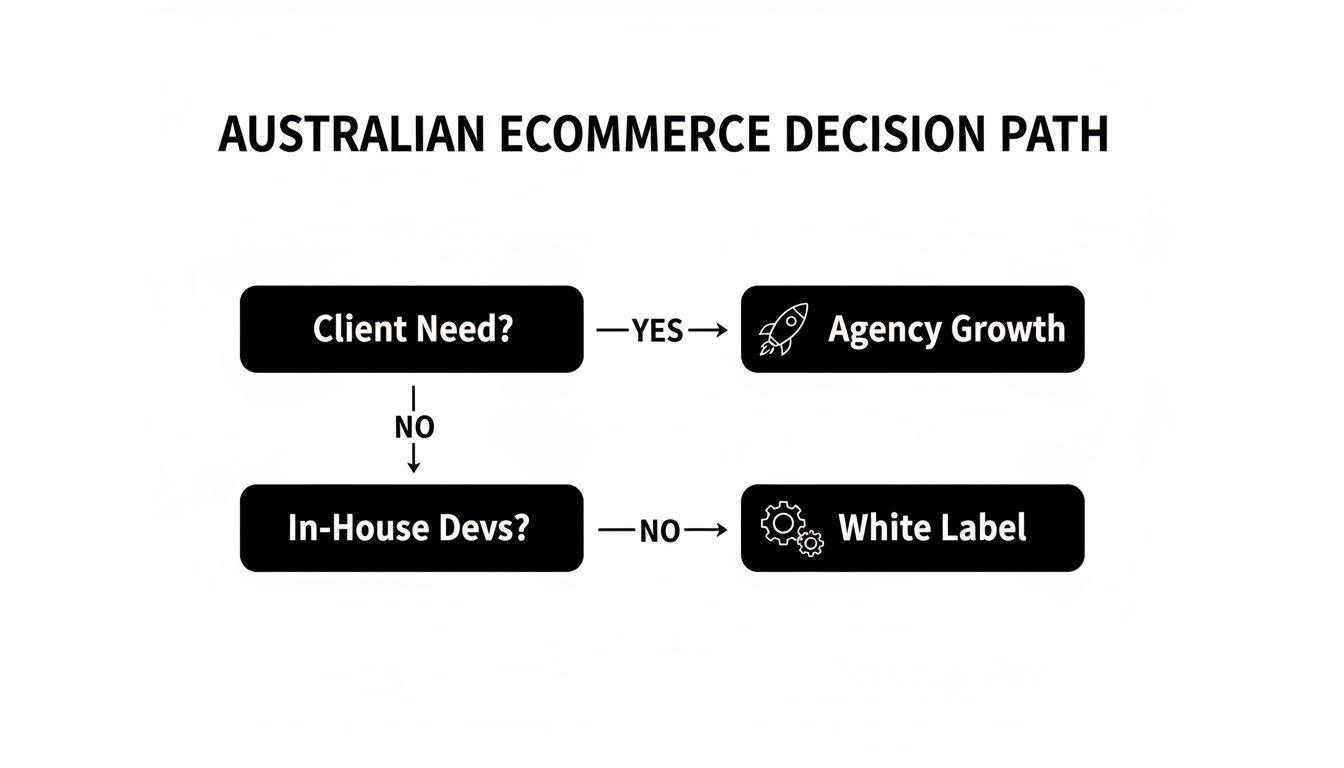
As the flowchart shows, when you don't have the in-house developers on hand, partnering with a white label service is often the most direct route to scaling your ecommerce offerings without the overhead.
The WooCommerce Advantage: Flexibility and Ownership
WooCommerce is a different beast entirely. It's an open-source plugin that bolts directly onto WordPress, meaning your client owns everything—the site, the data, all of it. This gives them total control. It's the go-to platform for businesses with really specific needs, complex product setups, or those who simply refuse to be limited by a template.
Let’s say you have a client who wants to build a sophisticated subscription box service, integrate with a custom-built inventory management system, and offer complex B2B pricing tiers. A skilled woocommerce developer australia can build that. It’s definitely more work upfront and requires a solid maintenance plan, but the trade-off is almost limitless flexibility. You can fine-tune every pixel of the user experience and every function of the back-end in a way a closed system like Shopify just can’t compete with.
- Total Design Freedom: You aren't boxed into a theme's structure. You can build a completely custom WordPress theme from scratch to match a unique brand vision.
- Endless Functionality: If you can dream up a feature, chances are it can be built, either with custom code or by tapping into the thousands of extensions available.
- Seamless Content and Commerce: Because it lives inside WordPress, WooCommerce is unmatched at blending a rich content strategy (like a blog) with the online store. We've explored this a bit more in our guide on WordPress vs Squarespace.
Shopify vs WooCommerce Decision Matrix for Agencies
To make this decision easier, we've put together a quick comparison table. Think of it as a cheat sheet to help you quickly align a client's needs with the right platform, based on the kinds of projects we see every day here in Australia.
| Factor | Shopify | WooCommerce | Agency Recommendation |
|---|---|---|---|
| Speed to Market | Excellent. Can launch a simple store in weeks. | Good. Requires more setup time for hosting, theme, and plugins. | For clients on a tight deadline needing to sell ASAP, Shopify is the clear winner. |
| Ease of Use (for Client) | Excellent. The dashboard is clean and intuitive for non-technical users. | Good, but with a learning curve. WordPress requires more familiarity. | If the client wants to be 100% hands-on with daily management, Shopify is easier to hand over. |
| Initial Cost | Lower. Predictable monthly fees, but transaction fees can add up. | Higher. Upfront development costs are greater, but no ongoing platform fees. | Shopify is more accessible for clients with smaller initial budgets. WooCommerce is a capital investment. |
| Ongoing Costs | Predictable. Monthly plan + app subscriptions + payment processing fees. | Variable. Hosting, maintenance, security, and premium extension renewals. | Shopify offers budget clarity. WooCommerce costs can fluctuate but often have a lower total cost of ownership at scale. |
| Customisation & Flexibility | Good. Limited to the theme structure and available apps. | Excellent. Limitless potential for custom features, design, and integrations. | For unique business models or bespoke functionality, WooCommerce is the only real choice. |
| Scalability | Excellent. Scales easily on Shopify's infrastructure (Shopify Plus for enterprise). | Excellent, but requires management. Performance depends on hosting and optimisation. | Both scale well, but WooCommerce gives you more control over the technical environment for high-traffic sites. |
| SEO & Content Marketing | Good. Solid SEO features, but URL structure can be rigid. | Excellent. Full control over all SEO elements and unmatched content integration. | For content-heavy brands where SEO is a primary driver of traffic, WooCommerce has the edge. |
| Agency Maintenance | Low. Shopify handles all core updates, security, and hosting. | High. Requires a dedicated maintenance plan for updates and security. | WooCommerce creates a recurring revenue opportunity for agencies through maintenance retainers. |
Ultimately, there's a reason both platforms are so popular. Shopify removes technical barriers, while WooCommerce removes functional ones. Your role is to help the client figure out which barrier is the more important one for them to break through right now.
Designing an Experience That Drives Conversions
A great-looking ecommerce site is a good start, but it's only half the story. If the user experience (UX) is clunky or the interface (UI) is a maze, even the most visually stunning website will see shoppers heading for the exit. The real win comes from creating a frictionless journey that intuitively guides your Australian customers from the moment they land on the site to the final click of the "buy" button.
This means looking past pure aesthetics and getting the practical stuff right—the elements that build trust and actually make sales happen. It all starts with a mobile-first approach. These days, most of your traffic will come from smartphones, so every single element needs to be perfect on a small screen. Think navigation menus, product images, and especially those checkout forms. Get it right on mobile, and it will work beautifully everywhere else.

Building Trust with Localised Features
To really connect with Australian shoppers, your design needs to meet their expectations head-on. One of the strongest trust signals you can send is offering familiar, local payment options.
- Buy Now, Pay Later (BNPL): Services like Afterpay and Zip aren't just a nice-to-have anymore; they're an expectation. Not offering them can be a major deal-breaker for a huge chunk of your audience.
- Local Payment Gateways: While global giants like Stripe and PayPal are essential, including direct bank transfers or other local gateways shows you understand the market and gives customers more confidence.
The Australian online shopping market recently soared to $63.6 billion, and the platforms winning are the ones built for speed and trust. It's also worth noting that younger buyers, particularly Gen Z, are increasingly making decisions based on sustainability. This is a golden opportunity for agencies, especially those using white label web development wordpress services, to create custom Shopify or WooCommerce themes that put a brand’s eco-friendly credentials front and centre.
Crafting High-Converting Pages and Checkouts
Your product pages are where the magic happens—or doesn't. This is where you either make the sale or lose it. You absolutely need high-quality images, persuasive descriptions that sell the benefits, clear stock levels, and upfront shipping info. Don't forget social proof; customer reviews and ratings are vital for building the credibility needed to tip a "maybe" into a "yes."
When it comes to the checkout, your mantra should be "ruthless efficiency." Every extra field, every unnecessary step, is another reason for someone to abandon their cart.
Your number one job here is to eliminate friction. Things like guest checkout, address auto-completion, and a crystal-clear cost summary aren't optional—they're essential. A simple, secure, and fast checkout is one of the most powerful conversion tools you have.
For a more detailed look at turning your site into a sales machine, check out this guide on how to increase your ecommerce conversion rate. By focusing on these core UX and UI principles, you’ll build an experience that doesn't just look professional but actively turns visitors into loyal, paying customers.
Diving into Core Development and Technical Integrations
Alright, you've nailed down the platform and have a killer, conversion-focused design ready to go. Now for the fun part: actually building the thing. This is where your agency's technical choices for website development for ecommerce will make or break the site's performance, security, and future-proofing. It’s all about creating a rock-solid foundation that not only looks brilliant but runs like a well-oiled machine.
One of the first big decisions you'll hit is whether to go with a pre-built theme or dive into custom wordpress development or shopify theme development. A pre-built theme can get you off the ground quickly and keep costs down, which is perfect for clients with straightforward needs and a tighter budget. The trade-off? They often come packed with bloated code that can drag down site speed and put a ceiling on how much you can truly customise the brand experience.
Custom Development vs. Pre-Built Themes
Custom development is definitely a bigger upfront investment, but the payoff is total control. A specialist in custom wordpress development australia can craft a lean, lightning-fast theme that does precisely what your client needs—no more, no less. This route is a no-brainer for businesses with unique functionalities, complex integration requirements, or a strong brand identity that just won't fit into a template box. On the Shopify side, a skilled shopify liquid developer can deliver that same bespoke experience from scratch.
Plugins and extensions are the lifeblood of these platforms, but they need to be handled with extreme care. Every single one you add injects more code, potentially opening up security holes or slowing things down. The aim is to add genuine functionality, not just digital weight.
Here's a pro tip we live by: Always vet plugins. Check for recent updates, solid reviews, and compatibility with your current platform version. An old, neglected plugin is a ticking time bomb for security and can completely derail your performance optimisation efforts.
Must-Have Integrations for the Australian Market
When building for an Australian ecommerce store, there are a few technical integrations that are simply non-negotiable. These are the connections that automate the nuts and bolts of the business, from working out shipping costs on the fly to processing payments securely. Getting these right is absolutely fundamental.
Make sure your development checklist covers these essentials:
- Payment Gateways: Of course, you’ll need the big players like Stripe and PayPal. But to really connect with Aussie shoppers, integrating local heroes like eWay, SecurePay, and Buy Now, Pay Later options like Afterpay and Zip is a game-changer for building trust and boosting conversions.
- Shipping APIs: This is a big one. Direct integrations with carriers like Australia Post and StarTrack, or hooking into a multi-carrier platform like Shippit, automates everything. We're talking real-time shipping quotes at checkout, automatic label printing, and customer order tracking. It’s a huge time-saver.
- Tax Configuration: Getting GST right is critical. The platform absolutely must be configured to apply the 10% Goods and Services Tax correctly to all relevant products and shipping fees for Australian customers. No exceptions.
- Inventory Management: If your client has a brick-and-mortar store as well as an online one, integrating their ecommerce platform with their Point of Sale (POS) system is crucial. This sync prevents the nightmare of overselling and ensures stock levels are always accurate, everywhere.
Nailing these core development and integration stages means you're not just handing over a website. You're delivering a powerful, secure, and efficient sales engine that's built from the ground up for the Australian market.
8. Your Go-To-Market Plan for Launch and Growth
You’ve built the site, and now the real work begins. Getting an ecommerce store live isn't just about flipping a switch; it's the starting pistol for a marathon of testing, optimising, and scaling. This is the moment your strategic approach to website development for ecommerce starts to deliver real, measurable results.
The final few days before launch are absolutely critical. This is where a detailed pre-launch checklist saves you from those embarrassing and costly day-one blunders. It's your last chance to iron out any kinks in the technical performance and the customer journey, ensuring those first visitors have a brilliant experience.
The Essential Pre-Launch Checklist
Before you announce the launch to the world, a final, thorough sweep is non-negotiable. Think of it less as bug hunting and more as a final dress rehearsal to confirm the site can handle the spotlight and turn clicks into customers from the get-go.
Your checklist should cover a few key areas:
- Walk in the Customer’s Shoes: Run through the entire buying process from start to finish. Do it on different devices—a phone, a tablet, a desktop—and in various browsers. Click every link, fill out every form, and push every button.
- Run a Final Speed Audit: Use tools like PageSpeed Insights one last time. Slow-loading pages are notorious conversion killers, so double-check that every image is compressed and your caching is working as it should.
- Check the Money Flow: Process a real, live transaction with every single payment option you offer. You need to be 100% certain that customers can actually pay you.
- Give SEO a Final Look: Are all your meta titles, descriptions, and alt tags in place? Make sure your sitemap is submitted to Google and there are no stray "noindex" tags blocking key pages.
A smooth launch sets the precedent for the entire business. Rushing this final step is a classic mistake. Taking an extra day to be thorough can save you weeks of frantic damage control and lost sales down the line.
Post-Launch Strategies for Sustained Growth
The moment the site is live, your focus pivots instantly to driving traffic and, more importantly, converting that traffic into sales. From this point on, data is your best friend. Proper analytics setup from day one is essential for tracking what’s working and what’s not, so you can make decisions based on evidence, not guesswork.
This is where Conversion Rate Optimisation (CRO) comes into play. You'd be surprised how small, iterative changes can produce massive results over time. Something as simple as A/B testing the colour of your "Add to Cart" button or tweaking the wording on a product page can have a direct impact on your client's revenue. These ongoing optimisations are often part of a wider marketing plan. If you're looking at how to manage this for clients, our guide to digital marketing outsourcing is a great resource.
The Australian ecommerce market is currently valued at a staggering USD 60.8 billion and it’s still growing fast. This spells a massive opportunity, particularly for website development for agencies australia. As more businesses rush to build their online presence, agencies without in-house developers can team up with a partner web agency australia to deliver high-quality, high-converting WooCommerce stores quickly and efficiently. You can dig deeper into the market's strong growth projections on IBISWorld.
How to Scale Your Agency with White Label Development
Sooner or later, every growing digital agency hits a wall. You've nailed your strategy, your design work is top-notch, and your client relationships are solid. But then the big, complex website development for ecommerce projects start rolling in, and suddenly your in-house team is stretched dangerously thin. You might even find yourself turning down great work. This is the exact point where smart agencies pivot their growth strategy by bringing in a white label development partner.
Partnering with a specialised provider is like instantly bolting on a new, expert development wing to your agency, but without the crippling overhead of hiring more full-time staff. It’s a model that’s all about predictable profit and scalable delivery. It lets you stop being just another service provider and start becoming a true growth partner for your clients.

Instantly Access Expert Developers
Let’s play out a common scenario. You’ve just landed a fantastic new client, but they need a deeply customised WooCommerce store with some tricky inventory integrations. Your team is great, but they're already at capacity. Instead of scrambling through a painful and slow hiring process, you can simply tap a white label wordpress agency with a bench of seasoned wordpress developers for agencies australia experts who are ready to start immediately.
This kind of partnership gives you on-demand access to a deep pool of specialised talent. Whether the project calls for a shopify expert australia to handle a complex migration or you need a reliable crew for ongoing wordpress maintenance australia, you can draw on their skills on a simple per-project basis. The best part? Your clients get best-in-class technical execution, all delivered under your agency’s trusted brand.
Lock In Predictable Profit Margins
One of the biggest headaches of running an in-house dev team is the financial guesswork. Projects can easily blow their budgets, and developer salaries are a fixed cost draining your cash flow, even when things are quiet. White label services completely sidestep this risk.
You get a fixed, wholesale price for the entire development scope. From there, you just add your margin and present the final quote to your client. It’s that simple.
This model delivers guaranteed profitability on every single project. No surprise costs, no scope creep eating away at your bottom line. You know your exact profit before a single line of code is even written.
This financial certainty is an absolute game-changer for any agency trying to scale responsibly. You can price your proposals with confidence, manage your cash flow effectively, and reinvest in other parts of the business, all while your development costs are completely locked in.
Say 'Yes' to More Complex Projects
Have you ever had that sinking feeling of having to turn down a project? Maybe it involved some intricate shopify custom coding or a unique feature your team just wasn't geared up to build. With a white label partner in your corner, those days are over. You can confidently pitch and win those ambitious ecommerce builds, knowing you have the technical firepower to back it up.
Being able to say ‘yes’ more often is fundamental to growth. It positions your agency as a versatile, problem-solving partner, which does wonders for client retention and opens up entirely new revenue streams. You're no longer hemmed in by the limits of your internal skillset. Exploring a service like white label Shopify development can unlock a whole new calibre of client work you might have previously thought was out of reach.
By weaving a white label partnership into your agency’s DNA, you create a more resilient, scalable, and profitable business. You get to focus on what you do best—strategy, creative, and client management—while your development partner handles the heavy technical lifting seamlessly in the background. It's the smartest way to deliver brilliant ecommerce solutions and scale your agency with absolute confidence.